

Books like Pride and Prejudice on this list are the ones I have personally read. Not books I found on a “you might also like” algorithm, not titles that simply share a genre tag with Austen. These are books that gave me the same feeling — that warm, unhurried atmosphere where love develops quietly, where the story doesn’t rush you, where you close the last page and sit there for a moment wishing the world were a little more like the one you just left. Some of them have happy endings. Some of them don’t. But every single one of them made me believe in love — the deep, patient, inconvenient, beautiful kind that Pride and Prejudice made all of us fall in love with in the first place.
The Choice – Nicholas Sparks

If you loved the slow, steady burn of Pride and Prejudice — the kind of story that doesn’t rush you, that lets feelings develop quietly before they hit you all at once — then The Choice might be exactly what you need next. It follows Travis and Gabby, two neighbors whose relationship grows gradually, almost reluctantly, the way the best love stories tend to. But what I didn’t see coming was the weight underneath it all.
The book reveals, almost like a quiet confession, that Gabby’s husband is in a coma — and suddenly everything you’ve been reading takes on a completely different meaning. That guilt she carries reminded me so much of Darcy. Not the same situation, obviously, but that same internal war between what you feel and what you think you’re allowed to feel.
Key Points:
- Things in common with Pride and Prejudice: A slow, measured pace that lets the romance breathe; a central character weighed down by guilt and inner conflict, much like Darcy’s struggle between pride and his feelings for Elizabeth
- Themes: Love, guilt, moral conflict, loyalty, second chances
- Best for: Readers who like emotional, quietly paced romance with a plot twist that reframes everything
- Who should skip: If you need fast-paced plots or find Nicholas Sparks too sentimental, this one won’t change your mind
Wuthering Heights – Emily Brontë

If Pride and Prejudice is the book that makes you believe in love, Wuthering Heights is the one that makes you feel how dangerous it can be. What’s interesting is that these two novels actually come from roughly the same era, and you can feel it — the same rigid society, the same unspoken rules, the same pressure of class and reputation hanging over every interaction. And yet the two stories couldn’t be more different in where they end up.
Heathcliff and Darcy share something that I find fascinating — they are both proud, both difficult, both the kind of men you’re not sure whether to admire or be frustrated by. But they are also deeply driven, determined in a way that sets them apart from everyone around them. The difference is that Darcy’s story bends toward grace, while Heathcliff’s breaks under the weight of everything he was never given.
The love between Heathcliff and Catherine is one of the most consuming things I have ever read. It is not soft or comfortable — it is obsessive and painful and completely impossible to look away from. And still, somehow, you have compassion for Heathcliff. Just like with Darcy, you understand him even when he is at his worst.
Unlike Pride and Prejudice, this one does not give you a happy ending. But that is exactly why it stays with you.
Key Points:
- Things in common with Pride and Prejudice: Same historical era; society’s rules and class pressures shape every relationship; a proud, complex male lead you can’t help but feel for
- Themes: Obsessive love, class, revenge, loss, the destructive side of passion
- Best for: Readers who want something darker and more emotionally intense, but still rooted in that classic romantic world
- Who should skip: If you need your love stories to end well, Wuthering Heights will wreck you — in the best and worst way
Love in the Time of Cholera – Gabriel García Márquez
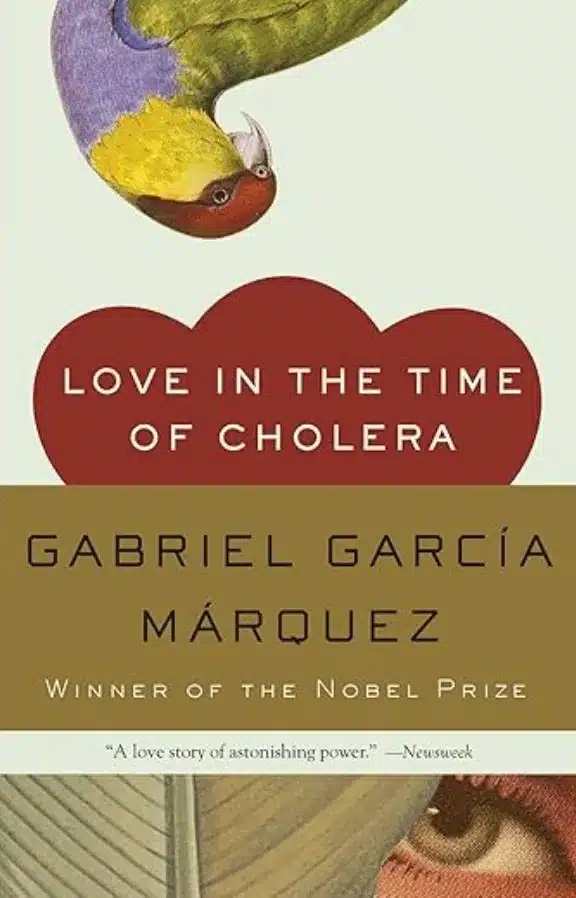
I’ll be honest with you — and if you’ve read my other posts, you know I always am — the connection to Pride and Prejudice here is not the strongest on this list. But I included it anyway, and I think you’ll understand why once you read it.
Márquez is a special kind of writer. When I say special, I mean the kind of crazy that you are grateful exists in the world. He writes about love with such detail, such patience, such almost obsessive attention, that by the end you don’t just read about it — you believe in it. The story follows Florentino Ariza, a man who falls in love young, gets rejected, and then carries that love inside him for decades. Not as a wound. As a certainty. He never stops hoping that one day they will find their way back to each other.
The one thread that connects this to Pride and Prejudice is that first rejection — the same wall that Darcy hit when Elizabeth turned him down. But where Darcy had months, Florentino had fifty years. And somehow that doesn’t make it sad. Somehow Márquez makes it feel like the most romantic thing a person can do.
I know Márquez is not for everyone. His style can feel slow, almost dreamlike, and some readers simply cannot settle into it. But this is probably his most accessible book, and if you let it, it will make you smile in a way that sneaks up on you — making you wish for that kind of love, even in your late years, even after everything.
Key Points:
- Things in common with Pride and Prejudice: A proud, persistent love that survives rejection; the idea that feelings cannot simply be switched off by circumstance or time
- Themes: Lifelong devotion, patience, aging, the many forms love takes over a lifetime
- Best for: Readers who want something deeply romantic but more literary and reflective
- Who should skip: If Márquez’s dreamy, slow-burning style frustrates you, this won’t be the exception — but if you’re even slightly curious, give it a chance
The Life List – Lori Nelson Spielman
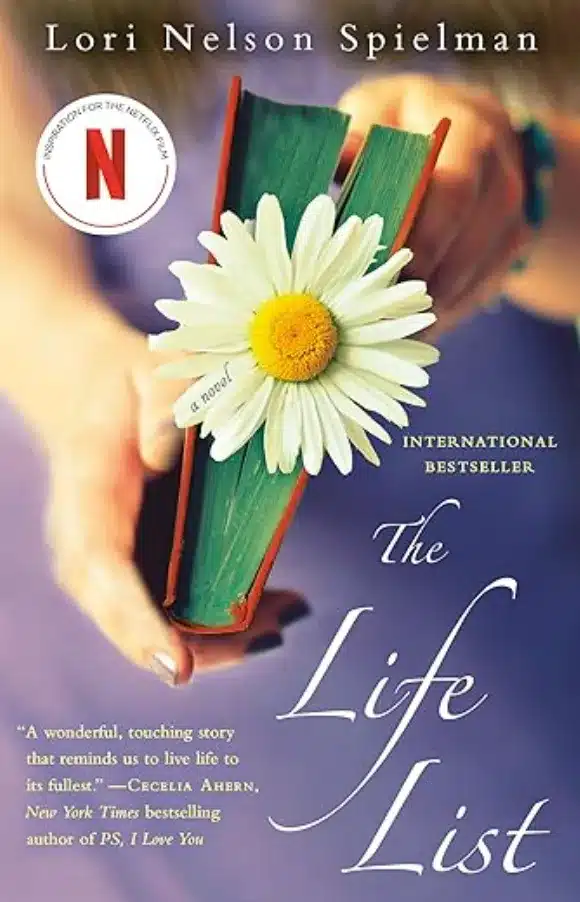
Not every book on this list is going to be a classic, and I think that is perfectly fine. Sometimes you just need a book that doesn’t make you feel heavy — one that lets you breathe, smile, and remind yourself that following your heart is never the wrong direction. The Life List is exactly that kind of book.
The story follows Brett, a woman who discovers after her mother’s death that she must complete a list of childhood dreams in order to inherit her estate. It sounds simple, and in many ways it is — but that simplicity is the whole point. There is something genuinely lovely about watching someone rediscover who they were before life got in the way.
What connected this to Pride and Prejudice for me was the lawyer who quietly appears throughout Brett’s journey, helping her complete her wishes with no expectation of anything in return. That silent, steady presence reminded me so much of Darcy — not the proud, guarded version we meet at the beginning, but the Darcy who works behind the scenes for Elizabeth without ever asking to be noticed or thanked. That kind of love, the kind that shows up without announcing itself, is rare in books and even rarer in life.
The romantic warmth I got from this book felt familiar in the best way — the same feeling Pride and Prejudice leaves you with when you close it.
Key Points:
- Things in common with Pride and Prejudice: A male character who loves quietly and acts selflessly behind the scenes, much like Darcy; a warm romantic undertone that carries the whole story
- Themes: Self-discovery, grief, following your heart, quiet love, second chances
- Best for: Readers who want something light, feel-good and romantic without it being too heavy or dramatic
- Who should skip: If you only read literary fiction and find lighter contemporary stories too simple, this might not be for you — but honestly, sometimes simple is exactly what you need
Tess of the d’Urbervilles – Thomas Hardy

If Wuthering Heights showed you the dangerous side of love, Tess of the d’Urbervilles will show you something even harder to sit with — what happens when society decides that a woman’s mistake defines her entire worth.
Tess is one of the most hardworking, sincere heroines I have encountered in classic literature. She does not ask for much. She simply tries to live, to survive, to love and be loved in return. And yet the world around her — with all its unwritten rules, its obsession with reputation, its impossible standards for women — makes sure she pays for every stumble with everything she has.
In that sense, this book sits very close to Pride and Prejudice in its world. The same era, the same social pressures, the same suffocating weight of what marriage means and what a woman is supposed to be. But where Jane Austen gives you wit and hope as a way through, Thomas Hardy gives you none of that mercy. He holds a mirror up to that society and refuses to look away.
What I keep coming back to is this — we all live this life for the first time. We are all allowed to make mistakes. Tess knew that. The tragedy is that the world she lived in did not agree.
I picked this book for this list because of its rich, detailed descriptions and how deeply it reflects the same social landscape that makes Pride and Prejudice so fascinating to read. Two very different stories, but the same world underneath.
Key Points:
- Things in common with Pride and Prejudice: Same historical era; marriage as a social institution with enormous consequences; the weight of reputation and class on every decision a woman makes
- Themes: Injustice, purity, social hypocrisy, survival, love and loss
- Best for: Readers who appreciated the social world of Pride and Prejudice and want to see its darker, harsher side
- Who should skip: If you need hope in your endings, Tess will be a difficult read — it is beautiful but it does not spare you
Gone with the Wind – Margaret Mitchell
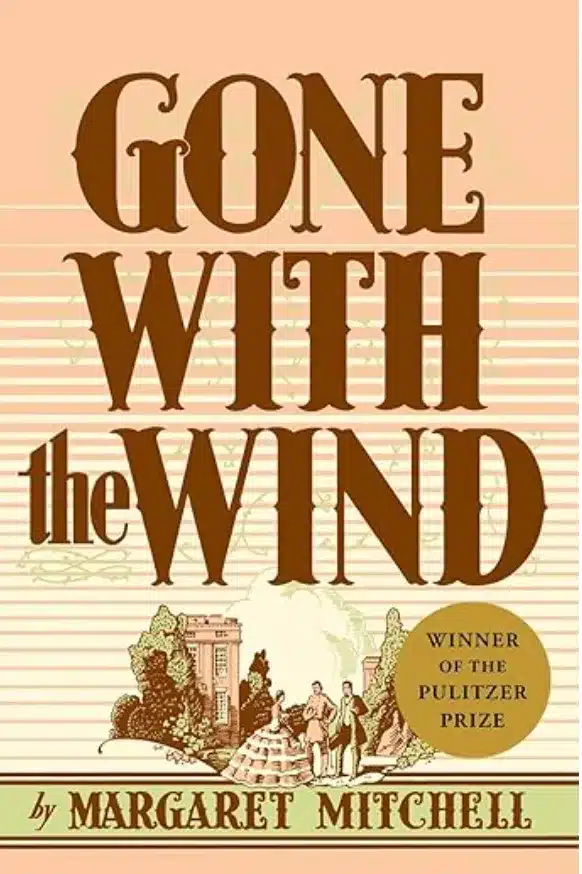
I will just say it outright — this is one of my top three favorite books of all time. And if you have read it, you probably understand why without me having to explain much.
Gone with the Wind is one of those rare books that is somehow everything at once. It is a love story, a war story, a survival story, and a portrait of an entire world that was disappearing in real time. Margaret Mitchell does not just tell you about the American Civil War — she puts you inside it, among ordinary people trying to hold their lives together while everything they knew was turning to ash around them. That kind of writing is not easy, and not many authors pull it off without losing the human story in the middle of the historical one. Mitchell never does.
And then there is Scarlett and Rhett.
Their push and pull, their pride, their stubbornness, the way they circle each other for hundreds of pages without ever quite getting it right — yes, it reminded me of Darcy and Elizabeth. The same tension, the same feeling that these two people are obviously meant for each other and somehow keep getting in their own way. But Scarlett is a different creature than Elizabeth, fiercer and more complicated, and Rhett carries a kind of world-weariness that Darcy never had to.
I picked this book not just for the romance, but because I genuinely believe everyone should read it. Not only to understand a piece of history and politics, but to understand people — how they survive, how they love, how they fail each other, and how, if you pay attention, you cannot help but feel compassion for almost everyone on the page.
Key Points:
- Things in common with Pride and Prejudice: A central love story built on pride, tension and two people who won’t easily admit what they feel; strong, sharp-witted heroine meets a complex, guarded male lead
- Themes: Love, survival, war, identity, loss, compassion, resilience
- Best for: Absolutely everyone — whether you come for the romance, the history or the characters, this book will give you something that stays with you for years
- Who should skip: Honestly? No one. But if extremely long books intimidate you, just know that every single page earns its place
The Strange Journey of Mr. Daldry – Marc Levy
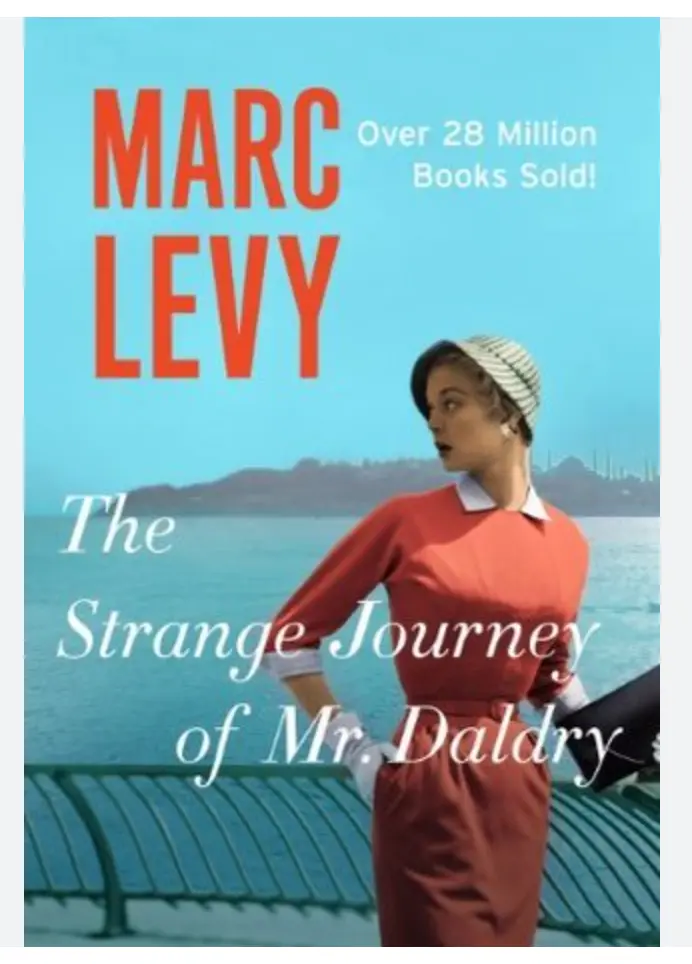
If someone asked me which book on this list comes closest to capturing the exact feeling of Pride and Prejudice, this would be my answer.
Mr. Daldry is, in every good sense of the word, a modern Darcy. Proud, handsome, not a man of many words — but a man of action. He does not tell you how he feels. He simply shows up, quietly and consistently, and does things that speak louder than anything he could have said out loud. That kind of character never gets old, and Marc Levy writes him beautifully.
But what makes this book especially close to my heart — and I suspect I am not alone in this among my readers — is that it weaves in the history of the Armenian people. It does it with care, not as a backdrop but as something that genuinely matters to the story. Reading about that history through the lens of a romantic, lightly written novel is a strange and moving experience. It makes you feel seen in a way you don’t always expect from a book like this.
And unlike some of the heavier titles on this list, this one does not demand anything difficult from you. It is the kind of book you pick up on a quiet evening, settle into your favorite chair with, and simply enjoy. By the time you finish it, you will catch yourself wishing for your own Mr. Daldry — and honestly, there is nothing wrong with that.
Key Points:
- Things in common with Pride and Prejudice: A proud, quietly devoted male lead who is a man of actions rather than words; a slow-building romance that unfolds with warmth and patience; that unmistakable feeling of classic romantic storytelling in a lighter package
- Themes: Love, identity, history, quiet devotion, self-discovery
- Best for: Readers who want that Pride and Prejudice feeling without the 19th century setting — perfect for a cozy evening read
- Who should skip: If you need high drama and fast plots, Mr. Daldry’s quiet charm might feel too gentle for you — but for everyone else, this is an easy recommendation
A Man Called Ove – Fredrik Backman
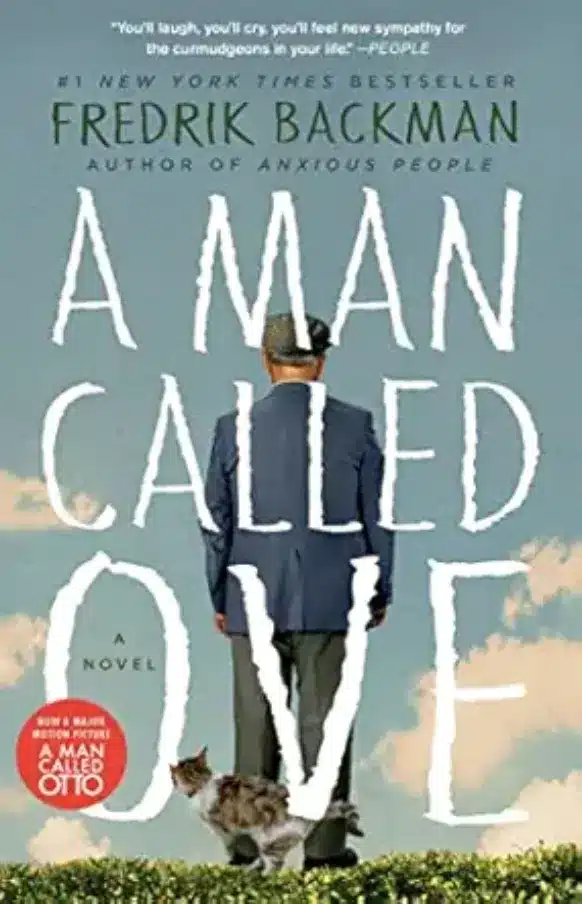
I cried for about an hour after finishing this book. And I want to be clear — this is not a tragic story. It is one of the warmest, most quietly devastating things I have ever read.
Ove is not an easy man. He is rigid, disciplined, grumpy in the way that only people who have loved very deeply can be grumpy. He has rules for everything and patience for almost nothing. And yet somewhere in the middle of this book, without you fully realizing when it happened, you fall completely in love with him. Because underneath all of that discipline and stubbornness is a man who loved his wife so completely, so unconditionally, that losing her left him with no idea what to do with himself.
There is no heavy plot here. No dramatic conflicts, no sweeping historical backdrop. This book is about something quieter and in many ways harder to write — emotions, memories, the small daily acts of love that don’t look like love until you step back and see the whole picture. It is about friendship that sneaks up on you, compromise that doesn’t feel like weakness, and the kind of devotion that doesn’t need to announce itself.
The connection to Pride and Prejudice is not in the storyline — it is in the feeling. That same warmth, that same sense that love is not always loud or obvious, that the people who feel the most are sometimes the ones who show it the least. Darcy and Ove would probably not get along. But they would understand each other perfectly.
After I finished it, I sat there and thought — will I ever find someone who loves like Ove did? I hope you do. I hope we all do.
Key Points:
- Things in common with Pride and Prejudice: A proud, misunderstood male character whose depth only reveals itself slowly; love that is shown through actions and quiet loyalty rather than grand declarations
- Themes: Grief, unconditional love, friendship, discipline, memory, finding reasons to keep going
- Best for: Anyone who wants to feel something real — this book will sneak up on you and stay with you long after the last page
- Who should skip: If you pick up this book expecting romance in the traditional sense, you might be surprised — but give it thirty pages and you won’t want to put it down
Jane Eyre – Charlotte Brontë

If you loved Elizabeth Bennet, there is a very good chance you will love Jane Eyre just as much. I would even say that out of every heroine on this list, Jane comes closest to Elizabeth in the way she thinks, the way she carries herself, and the way she refuses to be anything other than exactly who she is.
Jane is not a woman who bends. She is quiet, yes, and she does not take up much space in a room — but her mind is sharp, her morals are unshakeable, and when the moment comes to make a difficult choice, she makes it on her own terms, no matter the cost. She loves books, she loves learning, and she moves through a world that underestimates her with a kind of dignity that is impossible not to admire. Sound familiar?
The world she moves through is also deeply familiar if you come from Pride and Prejudice. Same era, same rules, same unspoken expectations about what a woman should want and who she should be. Charlotte Brontë, much like Jane Austen, understood exactly how suffocating that world could be for a woman with a mind of her own — and she wrote her way around it with the same quiet brilliance.
What I also appreciate is that Jane Eyre does not punish you with a tragic ending. There are twists, some of them genuinely unexpected, and the road is far from smooth — but the book respects both its heroine and its reader enough to let things land somewhere worth arriving at.
Key Points:
- Things in common with Pride and Prejudice: Same historical era and social landscape; a fiercely independent, intellectually curious heroine who refuses to compromise her values; love that is tested before it is earned
- Themes: Independence, morality, love, class, identity, resilience
- Best for: Every Pride and Prejudice lover — this is probably the most natural next read on this entire list
- Who should skip: Genuinely hard to think of someone who wouldn’t connect with this book — if classic literature feels slow to you, give it a little patience, it is absolutely worth it
Sense and Sensibility – Jane Austen

I almost did not include this one because the answer feels too obvious. But then again — how could I not?
The truth is simple: if you loved Pride and Prejudice, you will love every Jane Austen book. She wrote the same world, the same tensions, the same unspoken rules of society over and over again, and somehow it never gets old. Her genius was not in reinventing the story — it was in how deeply she understood people, and how she could make you feel the full weight of a glance across a room or an almost-said sentence.
Sense and Sensibility is a particularly good next step after Pride and Prejudice because it gives you two love stories running side by side, which will feel immediately familiar. Elinor and Marianne Dashwood mirror something of Jane and Elizabeth Bennet — one sister more reserved and rational, the other more feeling and impulsive. Two sisters, two very different ways of loving, and two storylines that pull you in completely different directions before finding their way home.
What I find beautiful about this book specifically is what its title already tells you — the tension between sense and sensibility, between what your head says and what your heart insists on. Austen never fully takes sides. She lets both sisters be right and wrong in their own ways, which is exactly the kind of honesty that makes her books feel timeless.
If you have only ever read Pride and Prejudice, consider this your permission to read everything else she wrote. You will not regret a single page.
Key Points:
- Things in common with Pride and Prejudice: Same author, same world, same social rules; two parallel love stories that mirror the Jane and Bingley, Elizabeth and Darcy dynamic; Austen’s signature wit and emotional intelligence on every page
- Themes: Love, reason versus emotion, sisterhood, society, heartbreak and hope
- Best for: Every Pride and Prejudice reader — this is the most natural companion book on the entire list
- Who should skip: If you have already read all of Austen, you know the answer — and the answer is still yes, read it again
I want to be honest with you, the way I always try to be on this blog. Not every book on this list will feel like Pride and Prejudice. Some are darker, some are lighter, some share only a single thread with Austen’s world. But they all share something harder to define — a warmth, a sincerity, a belief that love is worth the wait and worth the pain.
These are the books that made me wish, at least for a little while, that I could love and be loved the way these heroines were. And I think that is exactly what a good book is supposed to do.
If you have already read some of these, I would love to know which ones stayed with you. And if you find your next favorite from this list, even better — that is exactly why I made it.